Water
Hydration is central to how the method thinks about fascia. One core idea is how the organisation of water around proteins such as collagen affects tissue mechanics and electrical properties.




QuantumBiomechanics®
Developed by Mads Tömörkényi in 2014, QuantumBiomechanics® brings together fascia, breathing, posture and movement. The method also explores how water, light and magnetism relate to the way the body functions.
The biological framework
These three ideas inform the method’s view of the body and its environment. They connect aspects of tissue hydration, cellular energy and electrical activity with what we practise in movement.
Hydration is central to how the method thinks about fascia. One core idea is how the organisation of water around proteins such as collagen affects tissue mechanics and electrical properties.
Light is part of the environment in which we move and recover. The method considers how natural light helps set daily rhythms and explores research on how different wavelengths interact with cells and mitochondria.
The method takes an interest in the electrical and magnetic activity associated with living tissue. Its wider questions about the human biofield and environmental magnetism are part of the framework it explores.
Why fascia matters
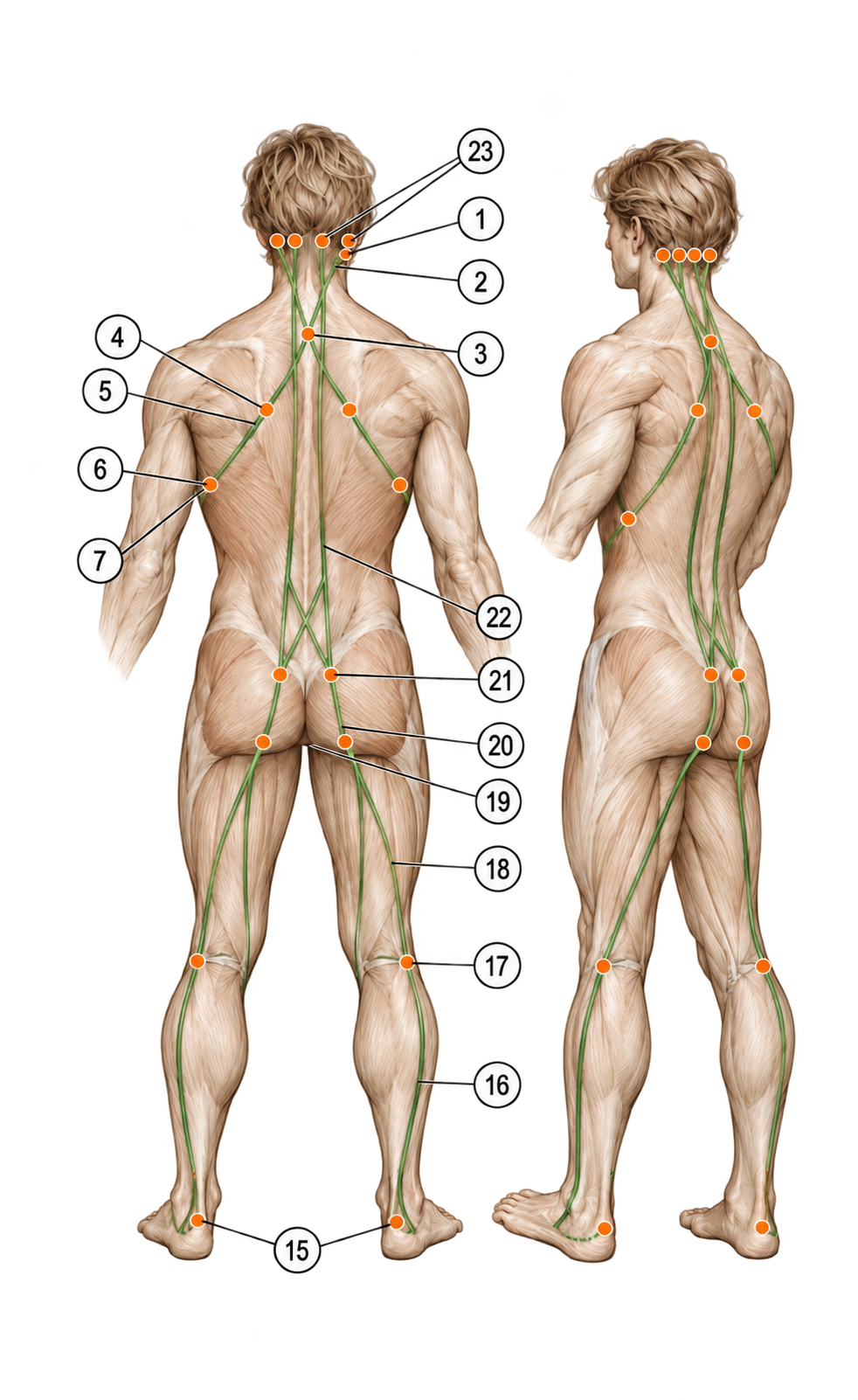
Fascia is the connective tissue that surrounds and links structures throughout the body. In QuantumBiomechanics®, it gives us a way to think about how force and tension are distributed as we move. A change in how you load your foot, for example, can change how you organise movement higher up the body.
Collagen and the water around it also shape the questions behind the method’s name. The framework considers proposals about collagen’s electrical properties and structured water at interfaces, sometimes called exclusion-zone or EZ water. Research on these topics and on tissue responses to light provides background for the method. The method uses these ideas to explore connections between biology and mechanics.
The training starts with how the whole person breathes, stands and moves. Daily habits affect what we practise repeatedly, so the method takes cues from everyday human movement such as walking, running, reaching and turning. These activities combine upright loading, rotation and coordinated movement across the body.
The seven pillars turn that perspective into a sequence. Begin with self-release and breathing, then build awareness of alignment and mobility before progressing to complex movements and elastic recoil.
The everyday foundations
From an evolutionary point of view, humans have always been exposed to the sun. Like plants, our biology requires natural sunlight to thrive.
The human nose functions as the primary respiratory organ, regulating breathing by maintaining optimal pressure, frequency, and volume.
Humans evolved to thrive through movement dominated by multidimensional patterns—such as walking, running, and hunting.
The training progression
Each stage gives you something to practise before adding complexity. Start with release and breathing, then build toward more coordinated and elastic movement.
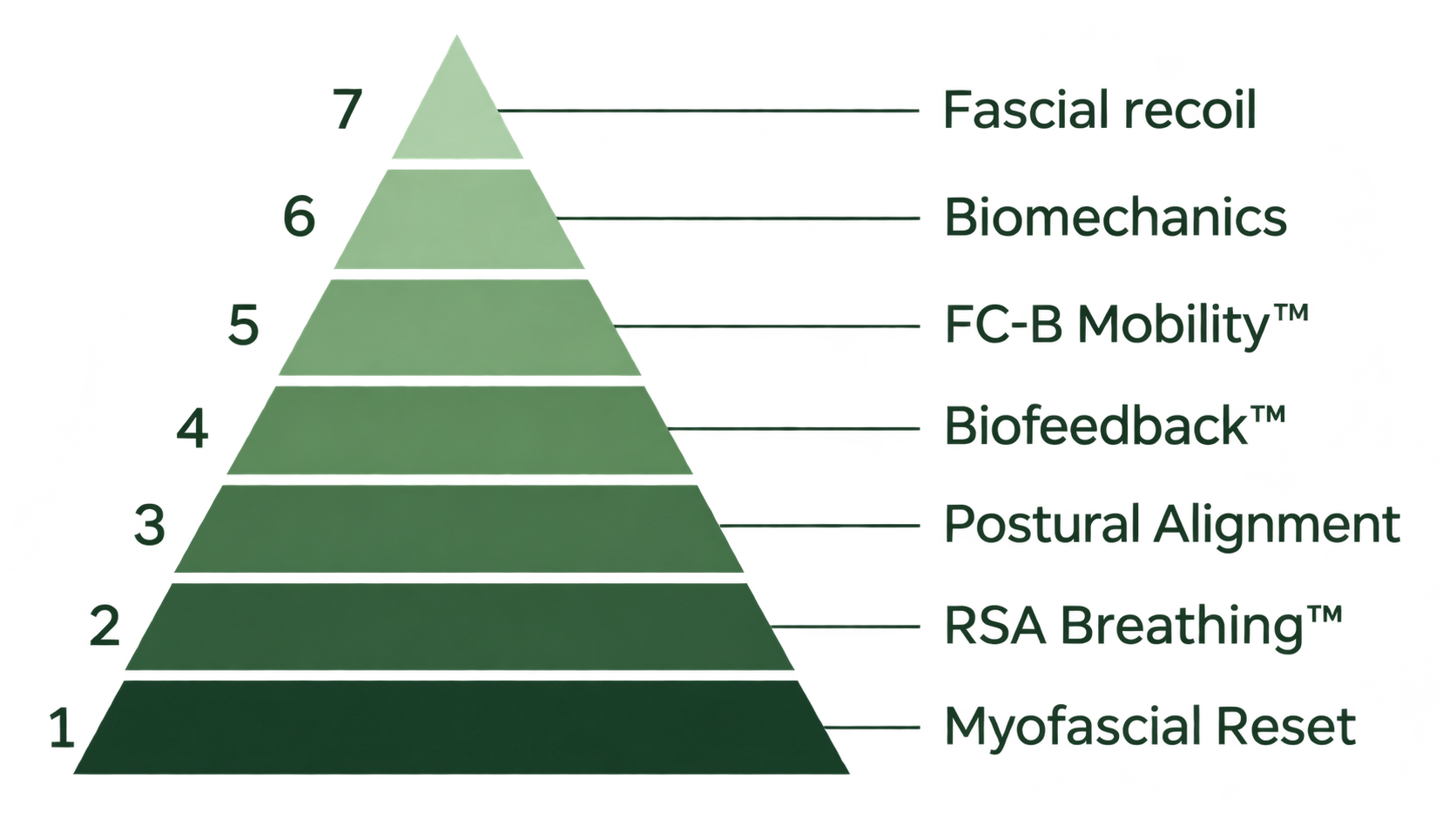
Begin with self-release techniques. Use pressure and movement to explore areas of tension and prepare for the breathing and alignment work that follows.
Release, Strengthen, Activate. Explore the movement of the ribcage and respiratory tissues, then practise breathing control and progressively more demanding breathing drills.
Start with upright stance. Notice how the feet, pelvis and ribcage relate, and practise distributing load and tension across the body.
Use Biofeedback™ Bands and other equipment to provide tactile feedback. The resistance makes habitual patterns easier to notice and gives you a cue for coordinating the next movement.
Use functional contraction-based stretches to practise actively controlling a larger range of motion. This stage builds on the earlier release and alignment work.
Bring breathing, alignment and mobility into whole-body movement. Practise changes of direction and the counter-rotation of the pelvis and ribcage that you see in walking and running.
Explore how elastic tissues store and release energy. Use rhythm and quick changes of load to practise spring-like movement and apply the earlier stages at greater speed.
Background reading
The method also draws on questions about water, light, magnetism and the electrical properties of tissue. The reading list brings together studies, reviews and hypotheses on these topics alongside research on movement and breathing.
Put it into practice